
E-commerce
DTC consumer health & wellnessBuilding the Organic Channel a Paid-Dependent Supplement Brand Never Had
A DTC supplement brand's growth ran entirely on paid acquisition with a rising CAC. Rebuilding category pages around real 'best X for Y' search intent gave it an organic channel for the first time.
- Client
- Direct-to-consumer supplement brand, USA
- Timeframe
- 11 months
- Scope
- Category & collection page strategy · Content-led product education hub · Paid-plus-organic budget rebalancing · Product & review schema
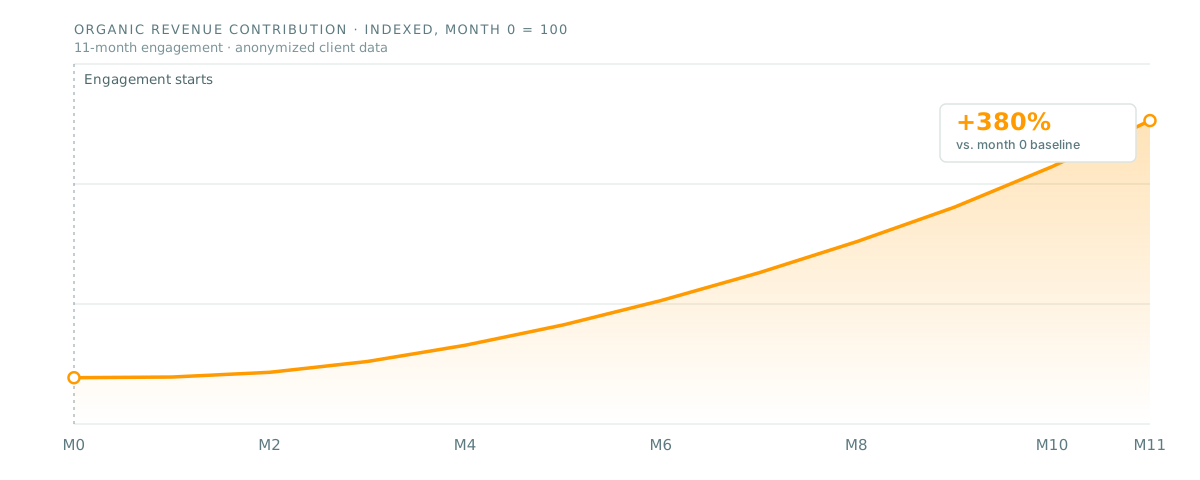
- +380%
- organic revenue contribution
- $18
- Blended CAC reduction (from $54 to $36)
- 41
- Category pages ranking page 1 (from 6)
- 29%
- Revenue now organic (from 6%)
The challenge
94% of revenue depended on paid acquisition across Meta and Google Ads, with blended CAC climbing every quarter and compressing margin on every order.
Category pages were thin product grids with no content addressing the searches customers were actually running — 'best magnesium for sleep,' 'best collagen for joint pain' — searches that publisher roundups and Amazon listings owned outright.
There was no organic channel to offset rising paid costs, and no content asset the brand controlled that could out-rank a listicle written by someone who had never used the product.
Diagnostic Transformation
The Structural Shift: Before vs. After
Inspect the baseline operational bottlenecks against the deployed compounding search infrastructure.
Category pages were product grids with zero educational content or search intent match
Category pages were product grids with no educational content, competing for zero search terms while paid CAC climbed quarter over quarter.
Critical Bottlenecks Identified:
- ✕Category pages were product grids with zero educational content or search intent match
- ✕Paid CAC climbing quarter over quarter with no organic channel to offset it
- ✕Publisher roundups and Amazon listings owned every 'best X for Y' search
Category pages rebuilt to rank for 'best X for Y' comparison and use-case searches
Forty-one category pages now rank for the comparison and use-case searches that used to belong entirely to publishers, and organic revenue share nearly quintupled.
Engineered Infrastructure Wins:
- ✓Category pages rebuilt to rank for 'best X for Y' comparison and use-case searches
- ✓Organic now covers 29% of revenue, up from 6%, without a paid budget increase
- ✓Product schema and verified review markup lifted category page CTR
Approach
Turn category pages into the 'best X for Y' answer
Every category page was rebuilt around the specific use-case and comparison language customers actually search, not just a grid of SKUs under a product-type header.
Build the education hub Amazon and publishers can't replicate
A 30-article ingredient and formulation hub, written from the brand's own R&D, gave category pages something no third-party roundup could copy: real product-specific evidence.
Rebalance paid budget as organic categories came online
Paid spend was stepped down deliberately, category by category, only after that category's organic page had proven it could hold rank — never all at once.
What was executed
- Mapped every 'best X for Y' and use-case search pattern competing publishers currently owned
- Rebuilt 41 category and collection pages with use-case copy, comparison tables and FAQ blocks
- Built a 30-article ingredient and education hub linked directly from category pages
- Implemented product and review schema across the full catalog
- Ran a phased paid-budget rebalancing plan as each organic category page matured
- Monthly reporting tying category page rankings directly to blended CAC movement
“Our paid CAC was going one direction. This is the first lever we've pulled that actually bent that curve instead of just working around it.”
Next step
Tell me what is broken. I will tell you whether I can fix it.
I take a small number of engagements at a time so each one gets real hours. If we are not a fit, I will say so in the first reply and point you somewhere better.
- Reply time
- Within one business day
- Working hours
- US Eastern & Central overlap
- Based in
- Mirpur, Dhaka, Bangladesh